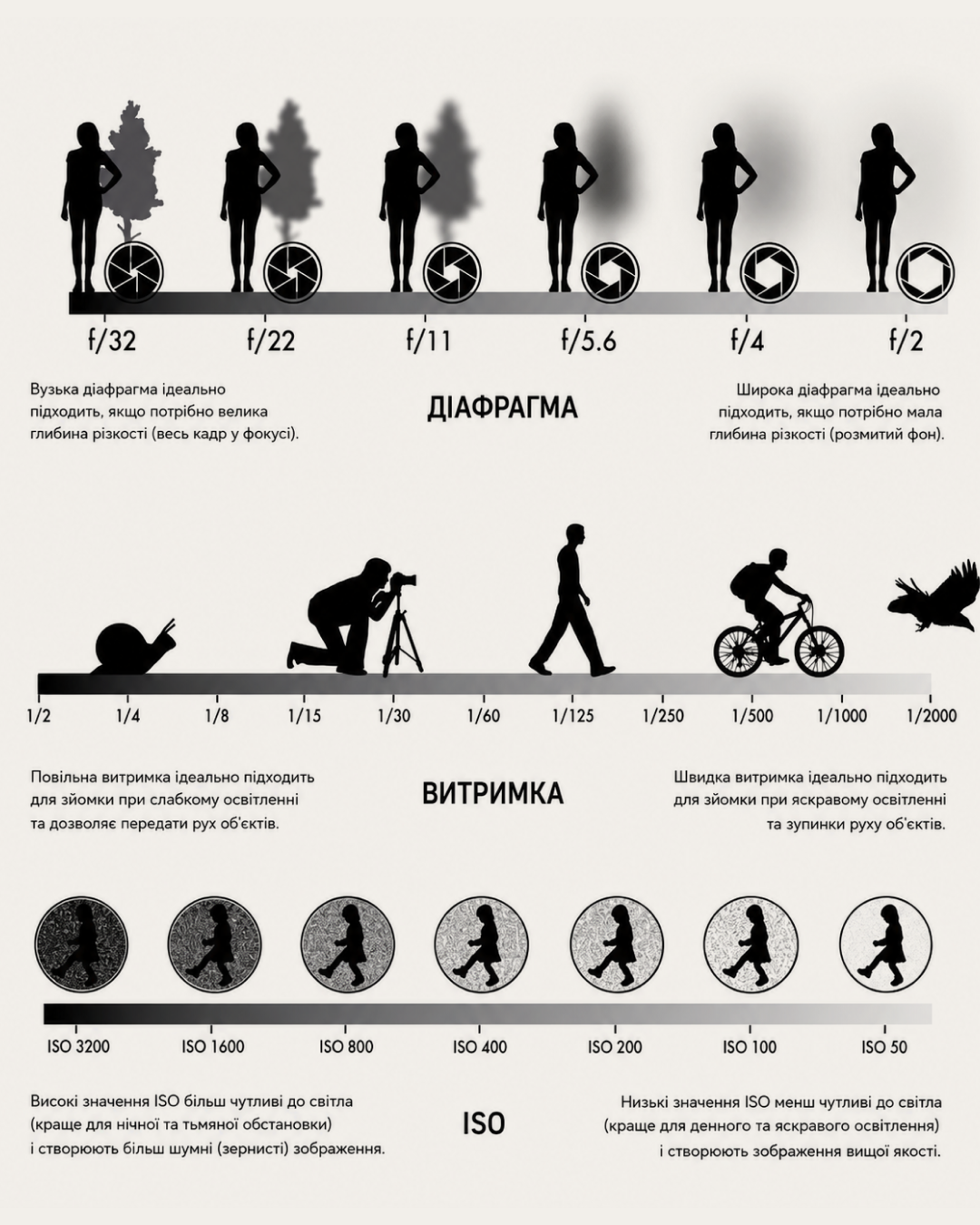
Photographer’s Cheat Sheet: ISO, Shutter Speed, Aperture
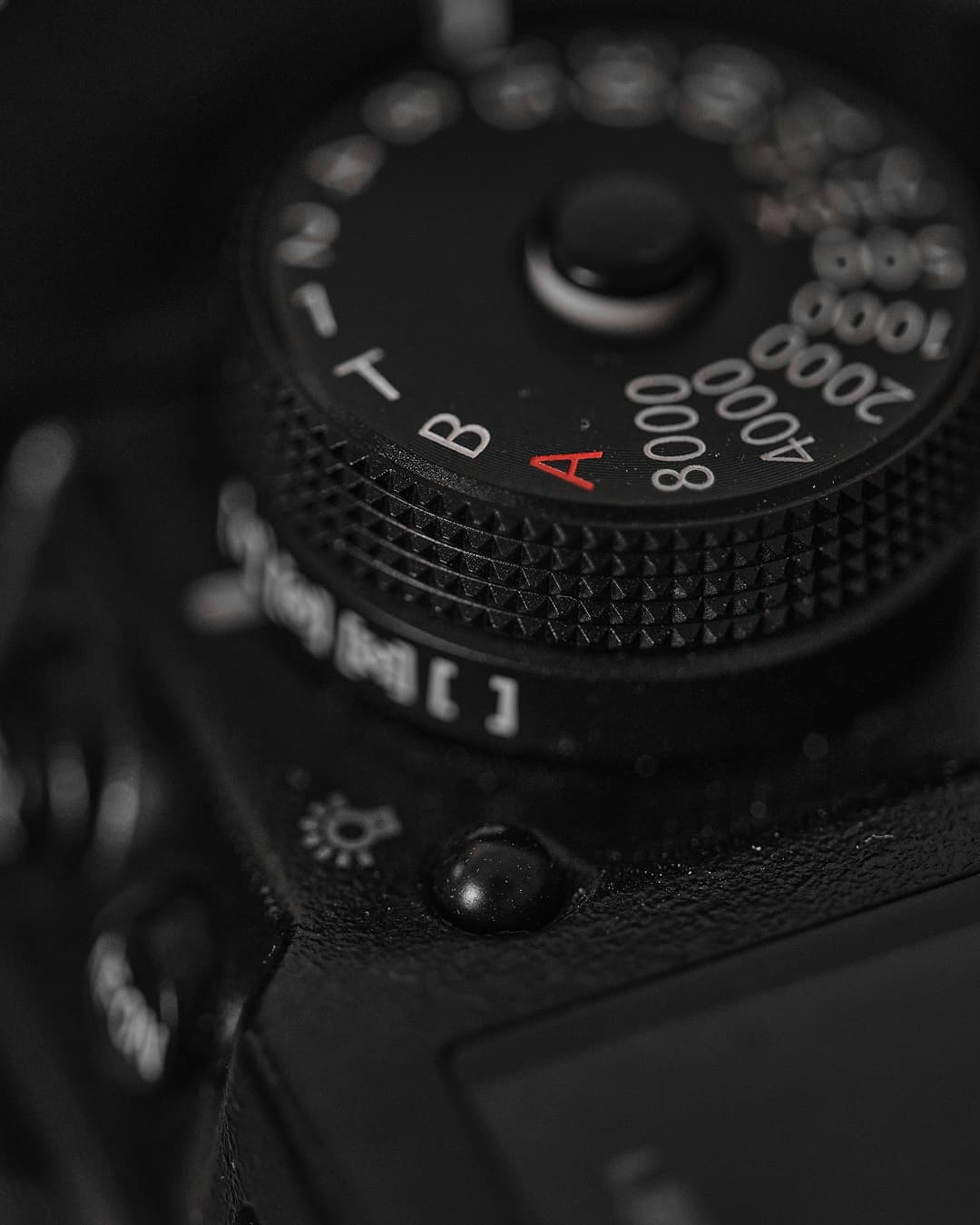
Exposure – it is the foundation of any frame. It consists of three parameters that together control the amount of light (exposure), the artistic appearance and sharpness of your shot:
Aperture (f): Controls the volume of light and depth of field (background blur).
Shutter Speed: Controls the duration of light exposure and motion transfer ("freezing" or blur).
ISO: Controls sensor sensitivity to light and the level of digital noise ("grain").
Changing one parameter always requires compensation by another. Below is a practical guide to exposure settings for the most common shooting situations.
⏱ Shutter Speed – controls motion
Shutter Speed determines how long the camera sensor receives light.
The shorter the shutter speed, the better you can "freeze" motion. The longer it is – the more light enters the sensor, but the risk of getting a blurry frame increases.
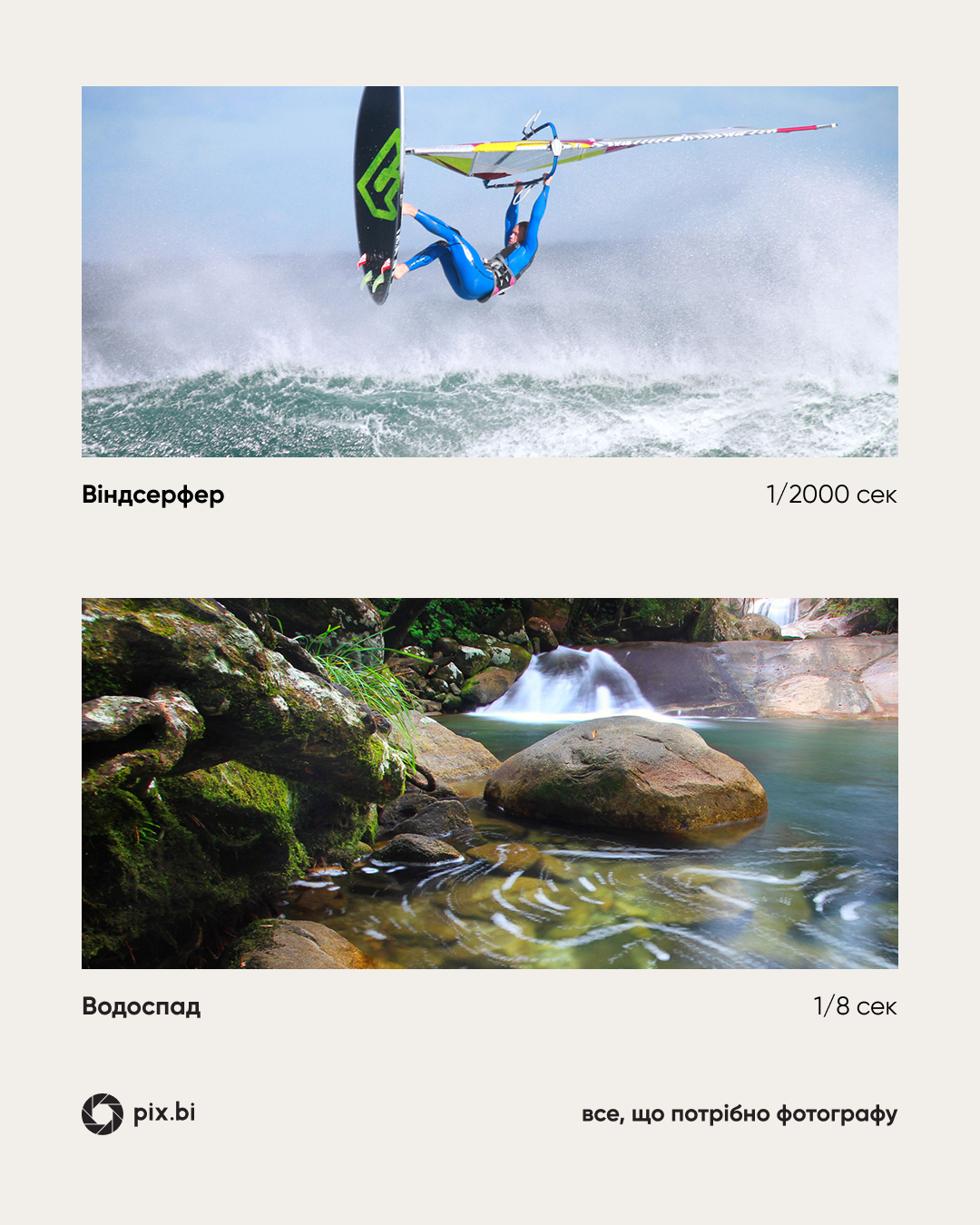
Short (1/500−1/4000 sec):
Effect: "Freezes" fast motion.
Used for: Sports, children, birds, water splashes.
Long (1/30 sec – several seconds):
Effect: Blurs motion (creates trails).
Used for: Silky water in waterfalls, car light trails at night, tripod shooting.
💡 Golden rule: To shoot handheld without blur, keep the shutter speed no longer than 1/focal length (for example, for a 50mm lens — no longer than 1/50 sec).
🔍 Aperture — controls depth of field
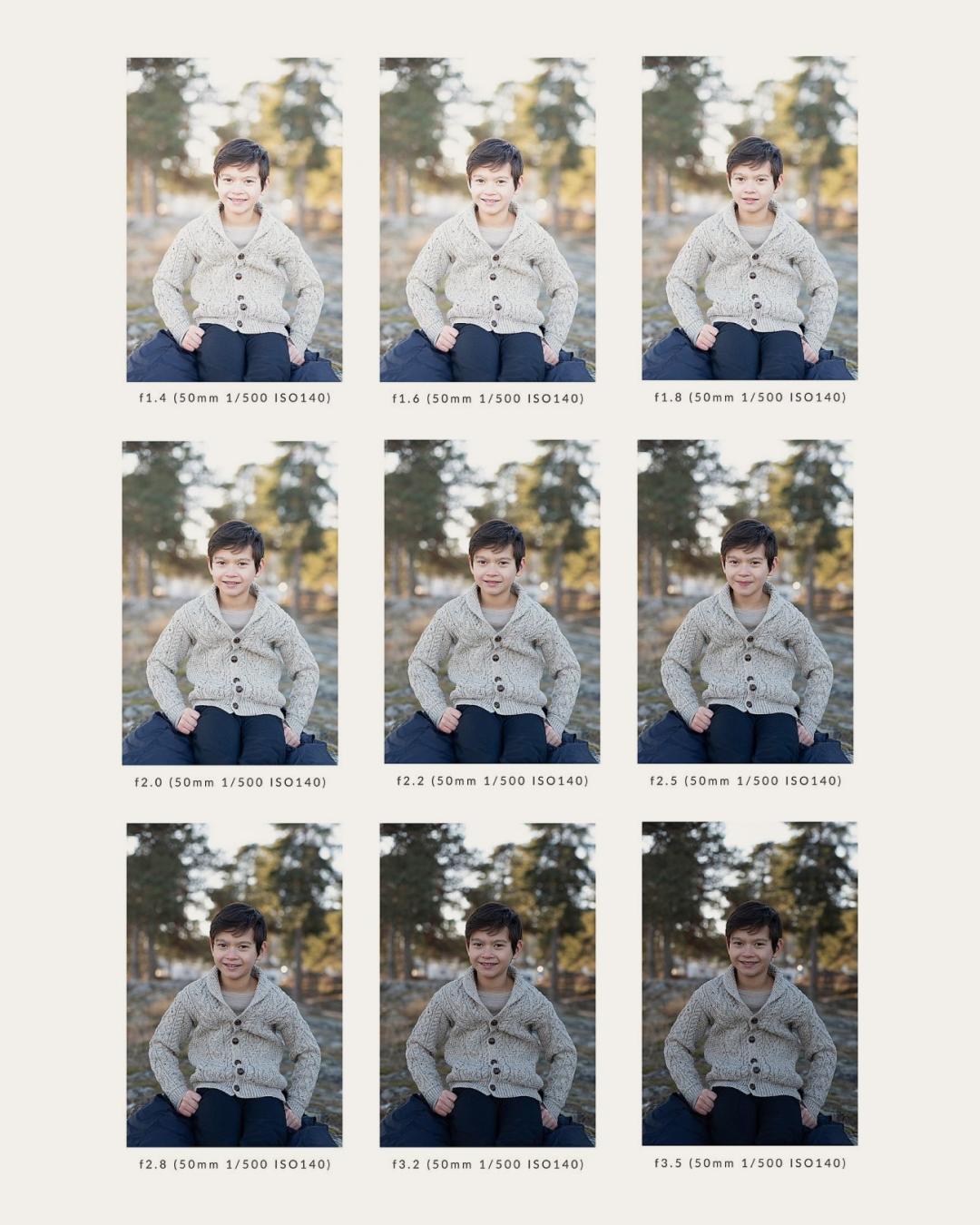
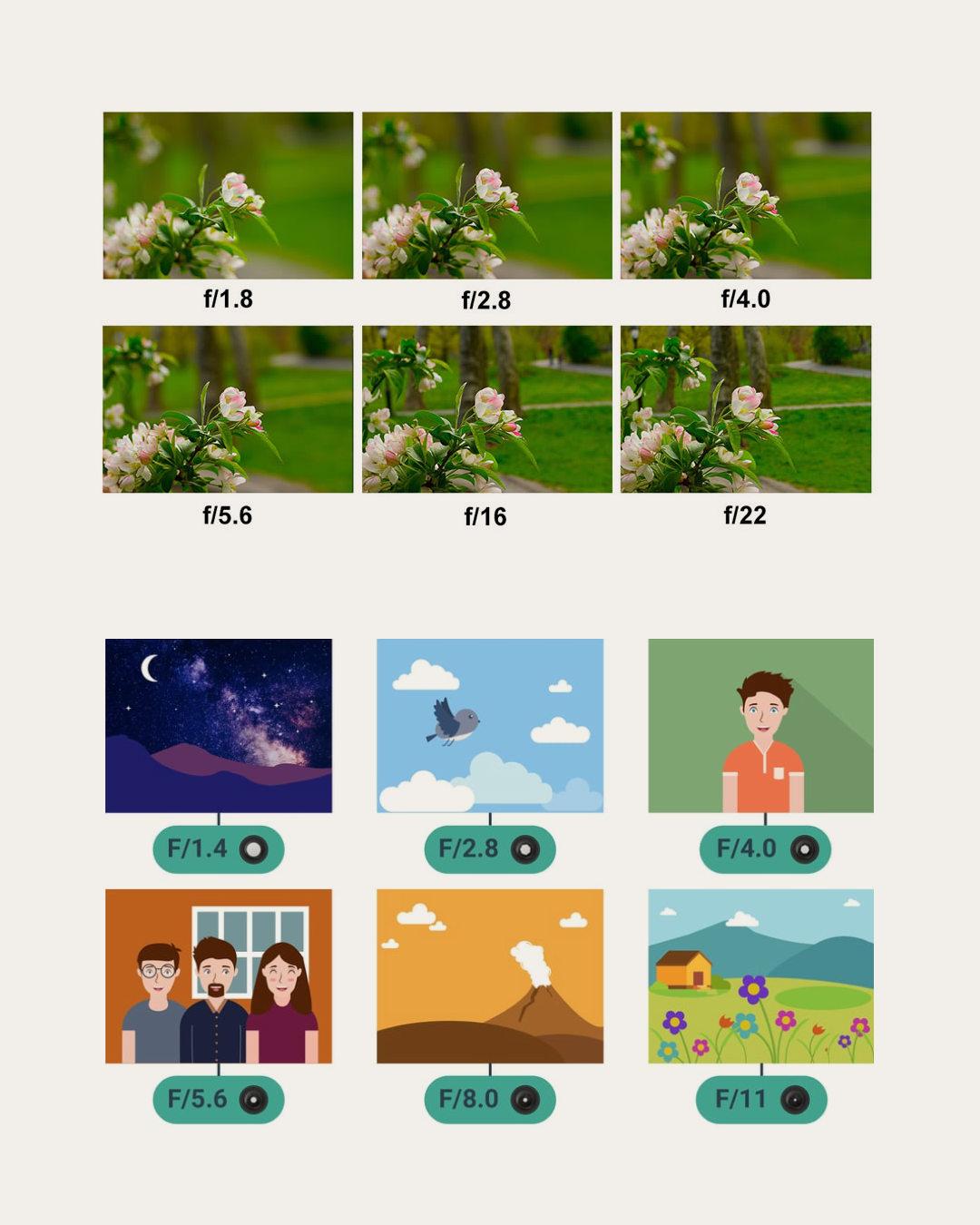
Aperture is denoted as f/. The smaller the number after f, the wider the lens is open and the more light reaches the sensor.
Small number (f/1.4−f/2.8): The opening is wide.
Light: Very much.
Effect: Blurred background (nice bokeh), only the subject in focus.
Used for: Portraits, details, shooting in darkness.
Large number (f/8−f/16): The opening is narrow.
Light: Little.
Effect: Everything is sharp (from foreground to horizon).
Used for: Landscapes, architecture, group photos.
Rule: want a blurred background – open the aperture; want greater depth of field – close it.
☀️ ISO – controls sensitivity and noise
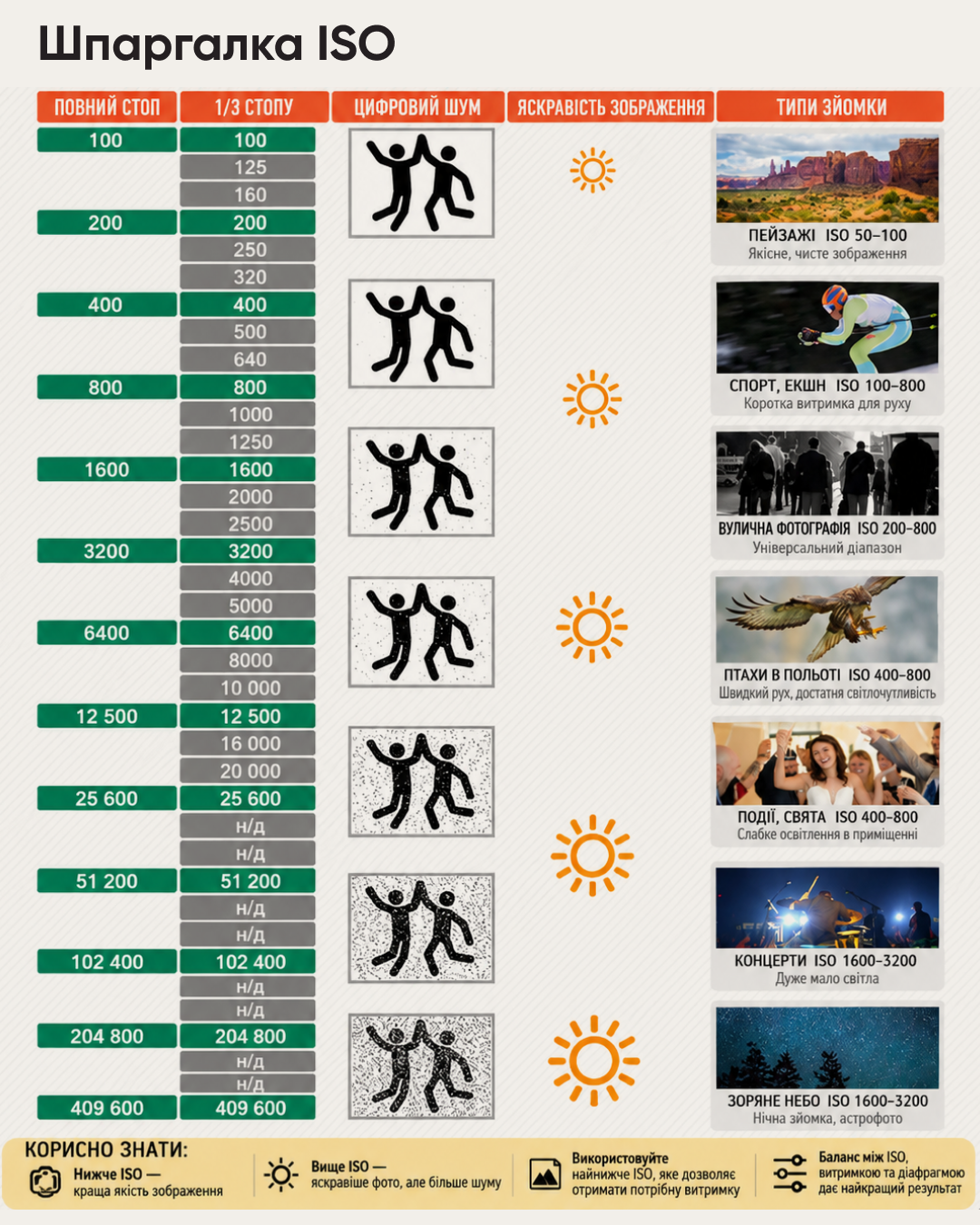
ISO controls sensitivity to light and the level of digital noise.
Low ISO gives a cleaner image, high ISO allows you to photograph in darker conditions, but can increase digital noise.
Low (ISO 100−200):
Result: Maximum clean and quality image.
Conditions: Clear day, studio, tripod shooting.
Medium (ISO 400–800):
Conditions: cloudy weather, shadow, indoors.
High (ISO 1600−6400+):
Result: The frame becomes lighter, but "grain" appears (digital noise).
Conditions: Evening, indoor space without flash, concerts.
For example, on a sunny day you can start with ISO 100, and during sunset gradually raise ISO as light becomes insufficient.
Rule: use the lowest ISO that allows you to get the desired shutter speed and aperture.
📸 How exposure works together
Imagine you're photographing a person at sunset.
There's already little light, so you can set:
1/250 s · f/2.8 · ISO 400
If the person is moving and the frame comes out blurry — increase the shutter speed to 1/500 s. But the camera will receive less light, so you can raise ISO, for example, to 800.
If you want to blur the background more — open the aperture to f/2. This will give more light, so ISO can be kept lower.
This is the logic of exposure: you change one parameter and compensate for it with others.
Examples for different conditions
🌄 Early morning (dawn)
1/125–1/500 s · ISO 200–800 · f/2–f/4
There's not much light, so an open aperture or higher ISO is often needed.
☀️ Bright midday sun
1/500–1/2000 s · ISO 100 · f/4–f/8
There's plenty of light, so you can use low ISO and short shutter speed.
🌅Sunset
1/250–1/500 s · ISO 200–800 · f/2–f/4
Light changes rapidly, so ISO may gradually increase. For a portrait, you can open the aperture to get a beautiful background blur.
☁️ Cloudy day
1/250–1/500 s · ISO 200–400 · f/2.8–f/5.6
There's less light than on a sunny day, so ISO can be slightly higher.
🌆 Evening or blue hour
1/60–1/250 s · ISO 400–1600 · f/1.8–f/4
Light becomes low. If you're shooting handheld, make sure the shutter speed isn't too long so the photo is sharp.
🌙 Night shooting
1/30 s and longer · ISO 800–3200+ · f/1.8–f/4
For static subjects, you can use long shutter speed and a tripod. If there are moving people in the frame, you'll need to shorten the shutter speed, compensating for the lack of light with ISO or an open aperture
🧠 Main cheat sheet
Remember three simple questions:
Is there motion? → adjust shutter speed.
Need a blurred background? → adjust aperture.
Not enough light? → raise ISO.
Exposure is not a set of "correct" numbers. It is a way to consciously control light, motion and depth of field to get exactly the frame you envisioned, so treat these values as a starting point, not as dogma – always check the histogram on the screen.
Shutter Speed = motion
Aperture = depth of field
ISO = light sensitivity and noise